Returning to flat pedals for all-mountain and enduro
- Mtb life
- May 23, 2018
I want to share my experience of the familiar flat-versus-SPD question when choosing MTB pedals. In truth, it had not been much of a question for me: for five or six years I had used only clipless pedals, without doubts. I ride enduro and all-mountain, with the occasional gran fondo.
When I started mountain biking I used flats. Then I quickly decided that “proper” riders used clipless pedals. If I wanted to take MTB seriously, I thought, I needed SPD. I tried several Shimano models and eventually used this one, even though enduro and all-mountain interested me more than XC racing.
After the awkward first rides, I forgot about flats and convinced myself that I was now a serious rider. I used SPD for years and persuaded several other people to switch too. These observations describe my experience and the scene as I saw it when I wrote the original article in 2018.
SPD pedals made things easier for me
Once I was used to being clipped in, I no longer thought much about foot placement on climbs. On fast, rough descents over rocks and roots, I did not worry about losing a pedal. Clipping in also made me feel more efficient. I could see no reason to use flats.
But that freedom from thinking about my feet eventually raised a question: could not thinking about them be holding back my technique?
Returning to flats
In spring 2018 I decided to work on my riding skills, both uphill and downhill. As often happens at the start of a season, enthusiasm sent me reading and researching. Several British and American articles recommended flats for learning technique. The idea appealed to me, and I discovered Ryan Leech’s online courses and his 12 Ride Flat Pedal Challenge.
At the same time I had some inflammation under my foot. My shoe had lost its shape and seemed to concentrate pressure in one spot instead of spreading it over the SPD pedal’s cage. That helped convince me to try flats again.
Were my feet becoming passive?
I kept encountering the idea that clipping in can encourage passive feet. Experienced riders may use their feet perfectly on SPD; I was interested because I felt I did not.
These were some of the arguments that caught my attention:
- Ryan Leech encouraged riders to use flats for his courses and advocated continuing with them.
- In his SPD-versus-flat video, Luca Masserini suggested that beginners spend at least a year on flats to learn technique.
- With the foot mechanically attached, it is easier to neglect active pressure through the pedal and the movements of feet, legs and body that help follow the terrain.
- To someone worried about losing the pedals on rocks and roots, flat-pedal advocates often answer that better footwork and leg movement are part of the solution. That matched what I was beginning to notice in myself.
- I had also seen an English tester compare flats and SPD over timed downhill sections. In that particular test, flats did not lose out on pedalling sections and were eight seconds quicker overall. One test is not a universal performance comparison, but it challenged my assumptions.
Flats and the racing scene
At the time, I felt that clipless pedals dominated downhill and enduro racing, with Sam Hill an obvious counterexample in enduro. Some explanations I read pointed to a self-reinforcing trend: once most successful racers use one system, it becomes difficult to compare the alternatives fairly.
There may be fashion, marketing and practical reasons involved. Can a bar’s sales tell you whether people prefer cola or orange soda if it serves only cola? It is worth questioning how the available choices influence what appears popular.
Elite racers also have exceptional technique and very different performance priorities from ordinary riders. When discussing the importance of pedalling out of corners, I think of Aaron Gwin’s chainless win in Austria. That does not settle pedal choice, but it puts a narrow argument in perspective.
Taking flat pedals seriously
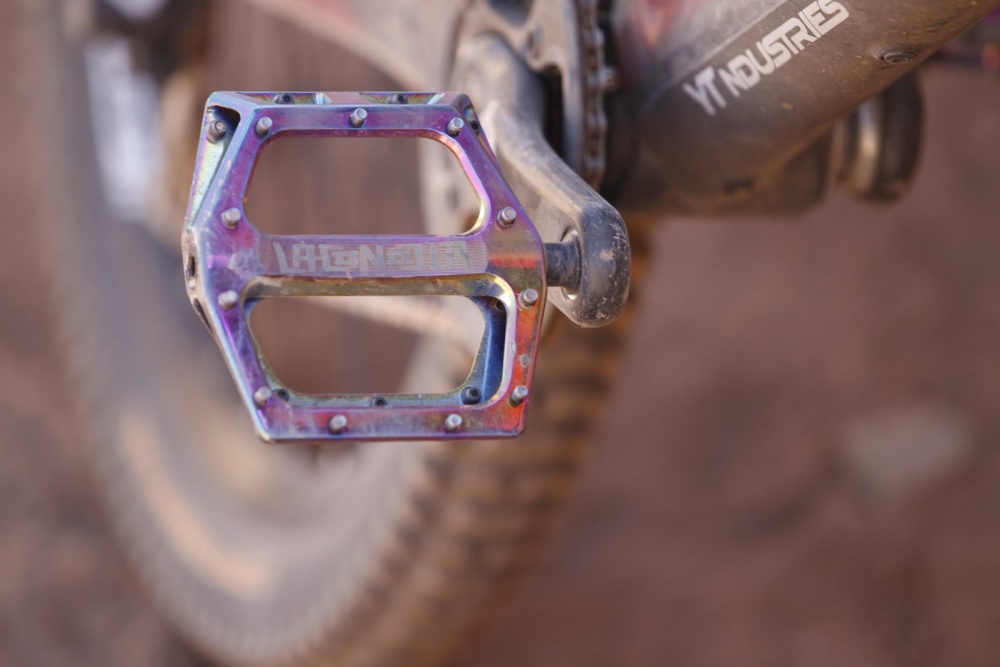
I chose a proper pedal-and-shoe combination: DMR Vault and Five Ten Freerider Pro. Ryan Leech’s course helped me see that riding flats has specific principles, closely connected to basic MTB technique.
I approached the change seriously on climbs and descents. My first impressions were:
- I felt I was using my feet to ride again.
- I became more aware of how I used my calves and Achilles tendons.
- I rediscovered a sense of fun that I had partly forgotten.
- I enjoyed a strong feeling of freedom.
- I tried more technical moves, uphill and downhill.
- I did not feel less effective climbing, because I felt I was using my feet better.
At first I still worried about the pedals on fast, rough ground, changes of gradient and small jumps. I expected that to improve with practice and thought the change was worthwhile.
Working on heel position, legs and body movement gradually shifted my attention away from the possibility of losing contact. I began to feel connected to the bike through movement, rather than a mechanical attachment.
Catalyst pedals
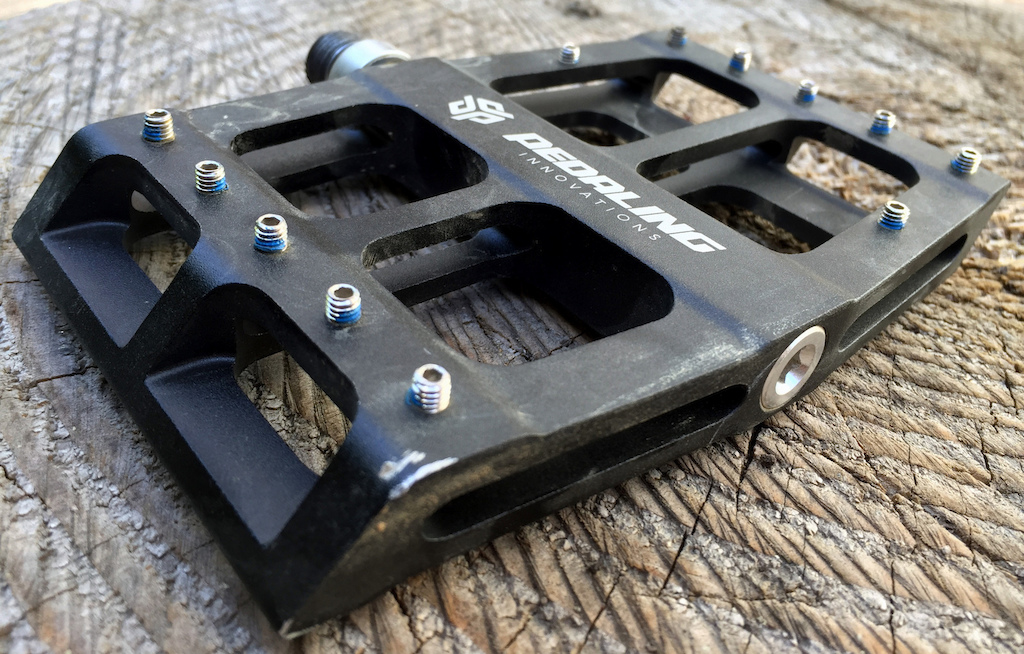
Alongside the DMR Vault pedals, I decided to order a pair of Catalyst pedals from the US company Pedaling Innovations. They can be ordered from the manufacturer. Their longer platform was the feature that interested me, and I had read enthusiastic owner reports about both pedalling and control.
The product links in this account include affiliate links.